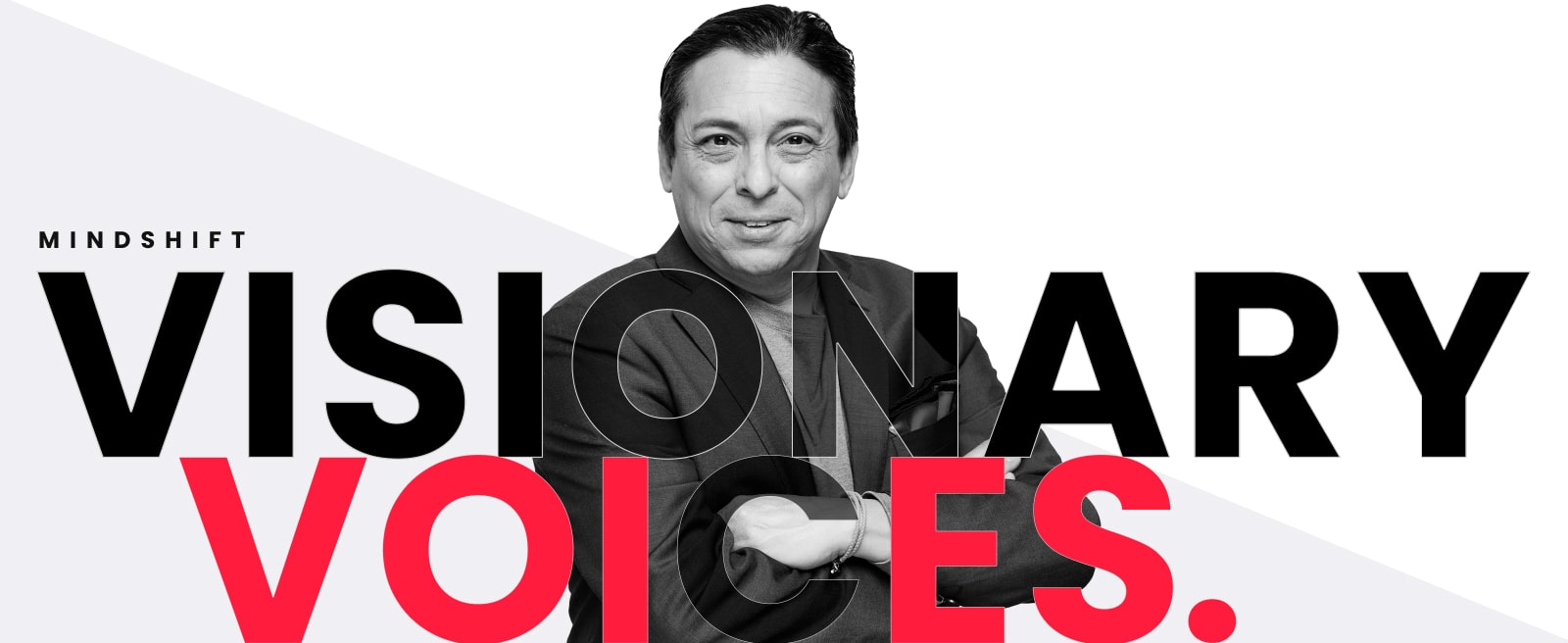
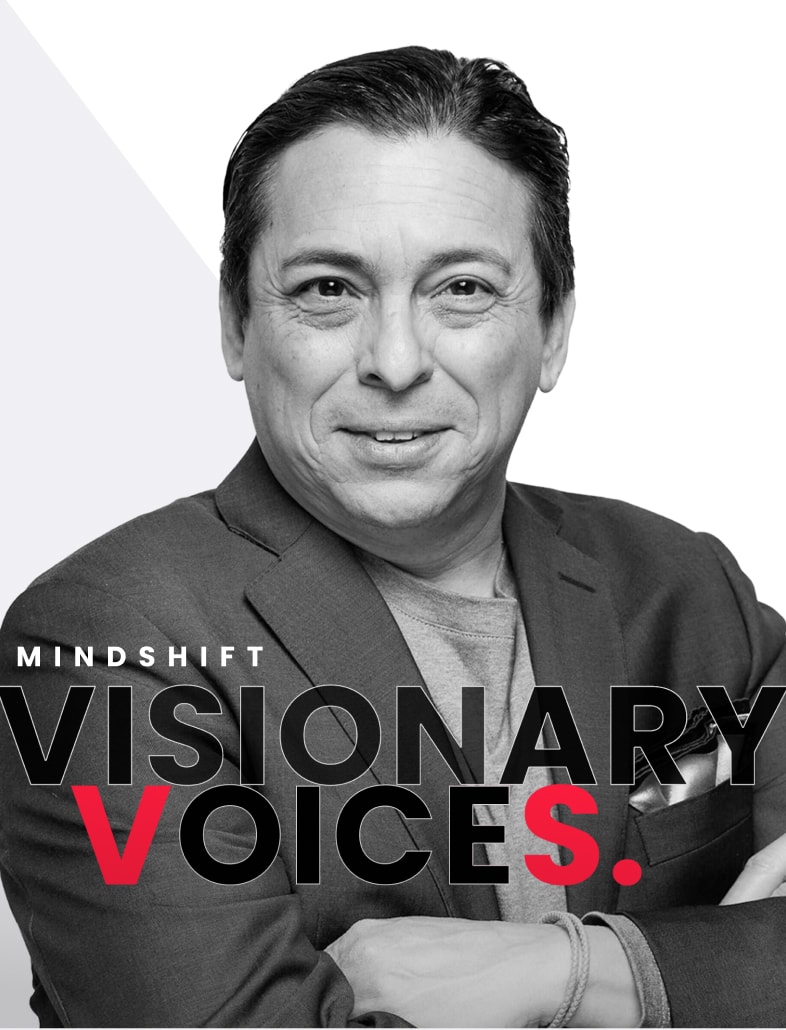
Brian Solis is Head of Global Innovation at ServiceNow, where he advises business and technology leaders on digital innovation and transformation strategies. A nine-time best-selling author, keynote speaker, and futurist, Solis has spent over 20 years studying the impact of disruption on businesses, markets, and society, and how to humanize technology to help leaders thrive in the future.
We sat down with Brian to discuss how leaders underestimate human capacity, confuse automation with augmentation, and design change as something imposed on people rather than built with them. The solution is a culture of psychological safety, curiosity as a core competency, and leadership that invites people to grow with AI.
Brian, you just wrote a research piece entitled “Work Reimagined.” Can you speak to what you’re seeing happen with AI?
AI changes cognition. That’s what I call cognitive Darwinism.
In the digital era, the advantage went to organizations that could digitize, scale, and move faster. In the AI era, the advantage shifts to people and organizations that can think differently, learn faster, ask better questions, and augment human judgment with machine intelligence.
It’s about the evolution of the most cognitively adaptive, curious, creative, imaginative…the biggest dreamers.
Used well, AI becomes a partner in imagination, decision-making, pattern recognition, innovation, and reinvention.
What we’re really talking about is augmentation at scale, where teams can read weak signals from customers, markets, employees, and operations in real time. Decision intelligence, where leaders can model options before committing resources. Human-agent orchestration, where employees manage teams of AI agents like digital colleagues. Rapid simulation and prototyping, where ideas can be tested before the first meeting invite goes out. Personalized employee and customer experiences, designed dynamically rather than through static programs. And perhaps most importantly, imagination work: exploring what the business could become, not just how it can run more efficiently.
How does this change the culture of an organization?
How do we help people become more curious, more discerning, more adaptive, more creative, more AI-fluent, and more confident in their own ability to evolve?
That starts with culture. Culture as permission. Permission to question assumptions. Permission to experiment. Permission to challenge the way work has always worked. Permission to learn out loud without being quietly punished for not already knowing the answer.
Let’s ask bigger questions like “What can people now do that was impossible before?”
The leaders who win this next era will build cultures where people don’t just use AI. They grow with it. They think with it. They challenge it. They create with it. They become more human because the machine handles more of what made work mechanical.
That’s the mindshift. And in an age of cognitive Darwinism, it may become the most important competitive advantage a company has.
What do leaders get wrong about their own people’s capacity to change?
The risk for leaders is not that they think too big about their people. The risk is that they think too small.
I’ve spent much of my research years studying what I originally called Digital Darwinism: the idea that technology and society evolve faster than organizations can adapt. Now we’re entering AI Darwinism, where intelligence itself is evolving faster than most leadership models, operating models, and cultures can keep up.
And this is where many leaders get it wrong. They can’t change, nor can they change their organization, at the speed of AI. At the same time, organizations haven’t changed the conditions that allow people to evolve.
People are not resistant to change by default. They’re resistant to irrelevance. They’re resistant to being talked at and being told to change. They’re resistant to being handed a tool and a deadline and then being told to “be innovative.” That’s not transformation.
People change when they can see themselves in the future. They change when they understand why it matters, how they contribute, and what they can become because of it.
Sometimes what leaders call resistance is intelligence trying to get their attention.
The leadership move is to invite that intelligence in…to cultivate operational intelligence. Give people context. Give them psychological safety. Give them AI fluency and a path to AI augmentation. Give them room to experiment. Give managers the responsibility to become coaches of curiosity, not just supervisors of output.
In an era of AI Darwinism, the winners will be the organizations where people are continuously learning, unlearning, relearning, and becoming more capable together…with AI.
What do people need to believe about themselves to embrace this kind of change?
I love this question. Honestly, what do any of us need to believe about ourselves when facing anything new, let alone something like AI that’s so profoundly promising and menacing at the same time?
People need to believe, and they need something to believe in…that could be a future state of themselves, a future state of outcomes where they see the role they played in achieving them, and what their world looks like post outcomes, a future state where they create or become something meaningful. What this all comes down to is a sense of hope and optimism.
People need to believe they are not being replaced by AI. Instead, they are being expanded by it. That’s an experience people have to feel in the work itself.
The first time someone uses AI to see a pattern they couldn’t see, solve a problem that used to overwhelm them, write a better strategy, test a better idea, or make a smarter decision faster, the emotional equation changes. There’s a click that leads to the next step of creativity and potential.
Fear starts to become curiosity.
Curiosity becomes confidence.
Confidence becomes capability.
I like the distinction between being a passenger and being a pilot. A passenger lets AI drive and hopes it knows where it’s going. A pilot brings judgment, taste, curiosity, context, and accountability. The pilot doesn’t outsource thinking. The pilot expands it.
So what do people need to believe?
They need to believe: I can learn this. I can grow with this. I can become more valuable because of this. I can use AI not to do less thinking, but to do better thinking.
How will the relationship between employees and organizations change in this kind of future?
In the very least, the relationship should become less transactional and more transformational.
Employees should be able to ask and answer, “What can I become here?”
That changes the social contract.
Organizations will have to offer more than tools. They’ll have to offer trust, guardrails, next-generation learning trajectory and velocity, experimentation, and meaningful pathways for people to grow. We want people to be more relevant, in-demand, and capable.
The employee side changes, too. People will have to bring an open mind, curiosity, adaptability, judgment, accountability, and a willingness to keep evolving. In this era of AI Darwinism, standing still becomes its own form of decline. The advantage goes to those who learn, unlearn, and relearn faster.
The real story, the real opportunity, is employee plus intelligence, inside organizations courageous enough to redesign work around human potential.
Humans must rise into more of what makes work meaningful: judgment, empathy, imagination, ethics, taste, storytelling, sensemaking, and leadership.
The companies that understand this will start helping employees grow into tomorrow’s possibilities.
What gives you the most excitement about where this is heading?
What excites me most is how people become more powerful, more mindful, and more human with AI.
What excites me is the possibility of augmentation. People who were once limited by time, access, budget, hierarchy, or even self-doubt can now think with a new kind of companion. They can learn faster. See patterns sooner. Prototype ideas. Challenge assumptions. Tell better stories. Make better decisions. Explore “what if” without waiting six months for permission and a steering committee or navigating unnecessary politics and bureaucracy because they have different questions and ideas.
That’s the promise of AIQ: Augmented Intelligence Quotient. The real question isn’t, “Are people using AI?” The question is, “Are people becoming more capable because of AI?” Are they becoming more curious, more creative, more discerning, more courageous?
That’s the human opportunity.
I’m optimistic because this is a rare moment to redesign work around augmented human potential. This moment requires new leadership. Vision and an articulated future motivating state. Governance. Ethics. Discernment. Taste. Humanity.
If we get this right, AI doesn’t replace the human story. It gives more people the power to write the next chapter.
That’s what excites me. The future doesn’t belong to AI. It belongs to people and organizations willing to think differently with it.
This moment becomes a new way of becoming.