
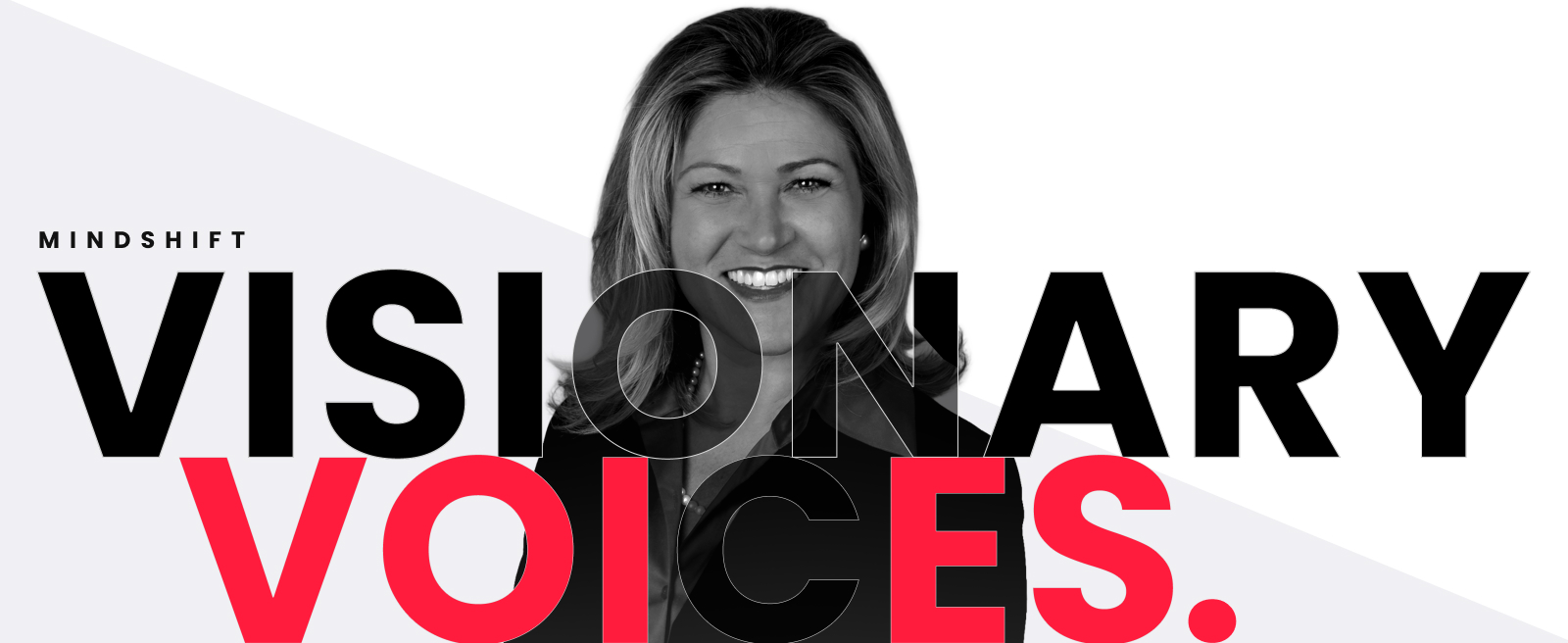
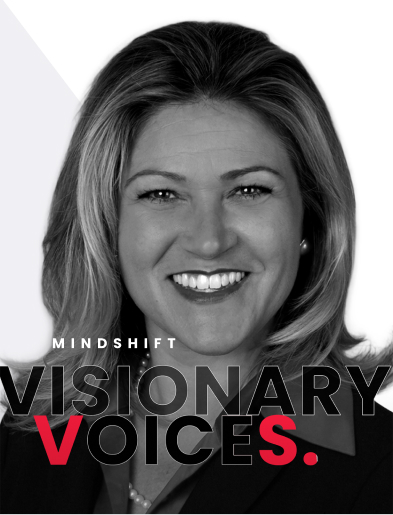
A former CAO and CFO, who is now a Chief Transformation Officer (CTO), Christina Smith has led an extensive range of digital transformation initiatives over the last 15 years. She is known for blending the financial mind of a CAO together with the cultural focus of a CHRO to embody the CTO role. She has a record of building high-performance teams and aligning transformation initiatives with corporate strategy, uncovering opportunities for innovation, automation, and long-term value creation.
As Chief Transformation Officer, with a background as a CFO and CAO, it’s interesting that you continually emphasize the human side of transformation. Why is people-centricity so important?
The research is consistent across Gartner, Accenture, McKinsey—the number one cause of failure in major transformations isn’t the technology. The technology usually works fine. It’s the people.
So if you make the journey people-centric from the start—partnering with end users to design and build solutions—you get two things automatically: better technology products, because the people with domain expertise shaped them, and built-in buy-in, because those same people helped create it.
A great example is a large SAP implementation I led. A key person from sales and engineering flagged real gaps in how the revenue module handled customer needs, scheduling, and supply chain integration.
Our mandate had been zero customization, but after listening carefully, my CIO partner and I approved a custom app that connected SAP to all the things the team needed: RFPs, supply chain, scheduling, multi-version quoting. It was proprietary, user-friendly, and far better than anything off-the-shelf would have been. That outcome was only possible because we listened to the people with the domain knowledge.
What is your secret weapon for driving enterprise-wide change adoption?
Marketing. Most people don’t think of the CMO as a partner in organizational change management, but they should. Marketing understands how to sell internally, how to run campaigns that resonate, how to filter messages through every communication channel, and how to read what employees—and customers—actually respond to.
I’ve had marketing own the Organizational Change Management (OCM) workstream directly, and it’s been highly effective.
The other thing marketing brings is a bird’s-eye view across all change initiatives. When you have multiple transformations running simultaneously, there’s a real risk of giving employees death by a thousand cuts. A central orchestration point—often best held by marketing—ensures the messaging is coherent; the cadence is manageable, and people feel a sense of shared momentum rather than chaos.
How do you hardwire new behaviors that stick during a transformation?
It’s all in the OCM campaign, and I’d estimate OCM accounts for about 40% of the effort in any large enterprise transformation. People often assume a good project manager can handle it on the side. That’s a mistake.
Think of OCM as an internal, coordinated PR campaign. It needs to start before the transformation does; I call it Phase Zero or even Phase Negative One.
You begin by anchoring everything to the company’s five-year strategic plan, then cascade goals layer by layer: from the C-suite down to SVPs, then directors, and ultimately to every employee.
At each layer you pause, check for gaps, and make sure everyone can see exactly how their daily work connects to one of the company’s strategic pillars. Then you reward people for it. If it’s in their goals at performance review time, the company must follow through. That link between daily behavior and recognition is one of the most powerful levers you have.
How do you predict and manage the different types of friction employees feel during change?
Resistance to change is usually a mix of emotional friction—fear, anxiety about keeping up—and practical friction, like the sheer effort these transformations demand. There’s also inertia: ‘this is the way we’ve always done it.’ As leaders, we have to plan for all of it.
A useful tool is the change curve. Enthusiasm peaks early, then people hit a trough of disillusionment as reality sets in, before eventually reaching higher productivity. Emotions can run raw in that trough. I’ve actually walked leaders through the curve in real meetings to remind them that if someone snaps at them, that person may just be at a different place in the curve.
The prescription is empathy—slowing down, genuinely listening, and coaching people through it rather than pushing past it.
You can also forecast friction in advance. Just as finance runs budgeting cycles, you can do structured exercises at the front end to predict where friction will show up and build mitigation into the OCM plan—whether that’s an upskilling program, adjusted job descriptions, or proactive communication.
How do you translate workforce modernization from an abstract concept into concrete changes around roles and skills?
It’s about connecting strategic intent to skill development. The CTO role is fundamentally about connecting dots—between strategy and people, between operations and financial outcomes.
For workforce modernization, that means asking: given our technology direction, what skill sets will we need in two or three years? How do we create opportunities for people to practice and build those muscles now, not after the fact?
That might mean updating job descriptions as you go. A data steward role, for instance, is often treated as something a person can handle off the side of their desk. It’s not; it’s a substantive, intensive role that deserves its own job description.
Upskilling programs are essential right now. The key is making them engaging: custom landing pages within your LMS, gamified badge systems, hackathons where employees compete to solve real company challenges using new tools.
The recognition matters, too. Some people are motivated by public acknowledgment, some by presenting to the executive team, some simply by the badge itself. A good program accommodates different learning styles and motivations.
Does AI and automation require a new kind of leader? What leadership skills matter most now?
Yes, absolutely. The org charts of the future already include bots and agents alongside humans. Leaders are going to have to manage hybrid workforces—human and technology—simultaneously. That’s genuinely new territory.
What it demands most is a deeper capacity for listening and empathy. Not just listening to form a rebuttal but listening to truly hear. Often what looks like resistance is actually a valid requirement or a real concern that, when addressed, produces a better outcome. We’ve seen that play out—the SAP revenue module situation is a perfect example.
This is also a period of unprecedented intensity of change, especially for office workers. Leaders need to hold space for the emotional dimensions of that—reminding their teams, it’s OK to feel unsettled, modeling empathy under pressure, and coaching people through the change curve rather than just expecting them to get on board.
Data quality is often the second-largest cause of transformation failure. How do you get business leaders to own the business data?
The first step is making clear that IT doesn’t own the data—the business does. IT builds the infrastructure, but the data originates in the business.
My approach is a three-way pairing: a data steward from the functional area with domain expertise, an FP&A or accounting partner who understands the financial linkages, and an IT representative who understands the infrastructure. Together they own the data from end to end.
The real shift happens when business leaders see data as something that helps them make better decisions—and hit metrics tied to their own performance goals. When the data is good, decisions are better, outcomes improve, and the benefits show up in bonuses and strategic wins.
At that point, data stewardship stops being something people have to do and becomes something they want to do.
What’s your top advice for a CFO embarking on a major transformation right now?
Three things.
First, connect the dots relentlessly. Everything that happens in operations eventually shows up on the P&L or the balance sheet. Your team has people who understand those linkages—in procure-to-pay, in quote-to-cash, in data stewardship. Get them involved in process redesign and reimagining. That involvement will drop real dollars to the bottom line.
Second, don’t let organizational change management get cut. CFOs sometimes think OCM isn’t their responsibility but given the dollars at stake and the failure rates tied to poor change management; it absolutely is their concern. The good news: OCM accounts for about 40% of the effort but not 40% of the cost. Most of it can be executed internally, with the right techniques, on a modest budget.
Third, be intellectually honest about ROI. Some returns are obvious—revenue growth, cost reduction. Others are less visible but equally real: lower turnover because you’ve automated repetitive work and created career paths, reduced burnout, better employee retention. Dig one or two layers below the surface before concluding something doesn’t have financial impact. It almost always does.



Visionary Voices