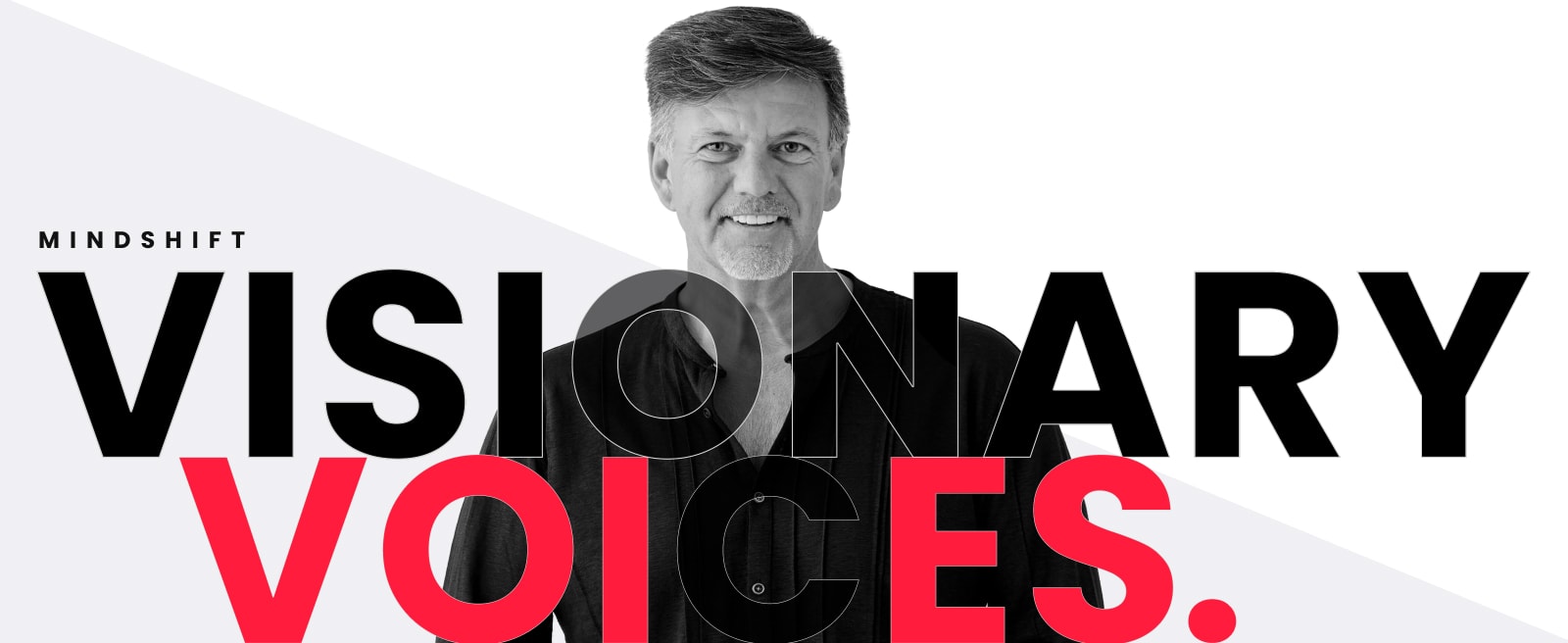
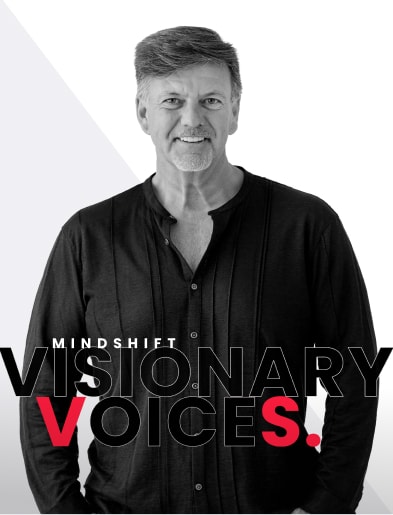
Dave Wright is Chief Innovation Officer at ServiceNow, where he helps organizations explore how AI and emerging technologies are reshaping business and work. A technology executive with nearly three decades of experience, Dave has held leadership roles spanning strategy, solutions consulting, cloud infrastructure, and enterprise transformation. He is the author of a new book The Infinite Company, which explores how organizations can combine human ingenuity with AI to become infinitely more powerful.
We sat down with Dave to talk about what can be created when Human + AI become your new workforce.
What do you mean when you talk about an “Infinite Company”?
An Infinite Company is designed to become more capable, intelligent, and adaptive over time by combining human ingenuity with AI. Most organizations use AI to make existing work faster and more efficient. Infinite Companies go further. They rethink how work gets done, how decisions are made, and how value is created. The goal is not simply optimization. It is expanding what is possible for the business, its employees, and its customers.
If you walked into an organization and knew nothing about it, what would tell you that it was operating as an Infinite Company rather than a conventional one?
You would notice it in the conversations. People would not be worried about being replaced by AI. They would talk about it as a tool that helps them think, learn, and create better outcomes.
The focus would be less on activities and more on results. People would describe what they achieved, not simply what they did. Most importantly, the organization would be more curious than defensive, constantly asking what could be reinvented rather than simply optimized.
You have said workflows are becoming more important than functions. What does that actually look like inside a company?
Functions are not disappearing, but they matter less than how work flows across the enterprise. Most organizations are still structured around departments, while value is created through workflows that cross multiple teams, systems, and functions.
As AI becomes more embedded in work, leaders need to understand how decisions move, where bottlenecks exist, and where humans and AI should collaborate. In many cases, workflow design will become more important than organization design. Companies that understand how work flows will have a significant advantage over those that simply automate individual tasks.
What are the first signs that an organization’s operating model is starting to change because of AI?
The first sign is that people begin focusing on outcomes rather than activities. Work starts being measured by what was accomplished rather than how many steps were completed.
You also begin to see management structures flatten. Traditional managers spend a great deal of time coordinating work. As AI takes on more of that coordination, leaders can focus more on decision-making, coaching, and handling exceptions. The organization becomes faster, more connected, and less dependent on hierarchy.
What organizational changes should leaders be making right now?
Start with workflows, not technology.
Choose a workflow that matters to the business and redesign it from end to end. Don’t begin by asking where AI can be inserted. Begin by asking whether the workflow itself should be redesigned.
Leaders should also establish clear ownership for critical workflows and measure business outcomes rather than AI adoption. The companies making the most progress are not running dozens of disconnected pilots. They are fundamentally rethinking how work gets done.
What jobs or roles do you think will look fundamentally different five years from now?
Many roles will spend less time gathering information and more time applying judgment. Managers will spend less time coordinating work and more time leading teams that include both people and AI agents.
We’re also likely to see new roles emerge around workflow design, AI orchestration, governance, and oversight. Organizations will need people who understand not only how AI works, but how humans and AI work together to create value.
What is the biggest risk leaders should be paying attention to right now that isn’t getting enough attention?
The biggest risk is deploying AI without truly understanding it.
Many organizations are making significant investments based on pilot results, vendor presentations, and market momentum without fully understanding where AI succeeds, where it fails, and what outcomes it is producing.
At the same time, leaders must be careful not to outsource too much thinking. AI should strengthen human judgment, not replace it. Organizations still need people who can challenge assumptions, ask difficult questions, and make decisions when the answer is not obvious.
If you were advising a leadership team preparing for the next five years, what is the one mindset shift you would want them to make today?
Stop asking how AI can make the current business more efficient and start asking what becomes possible because AI exists.
Most leadership teams have been trained to optimize what already exists. The next generation of leaders will use AI to rethink products, services, customer experiences, and entirely new business models.
The organizations that win will not necessarily be the ones that deploy the most AI. They will be the ones that use AI to create something they could not have created before.